
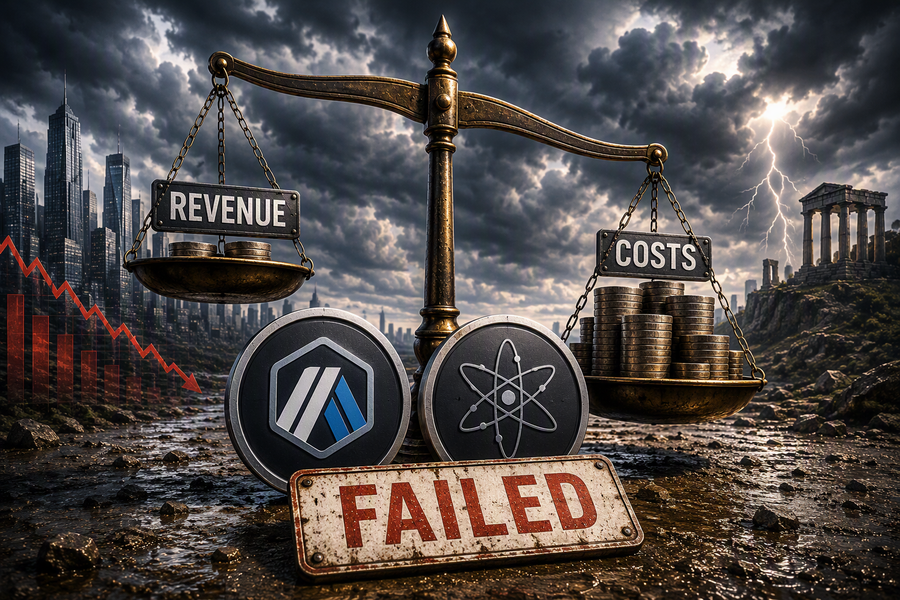
Crypto List Update: Two Popular Tokens Failed the Review
Two tokens came up for review this week: an established Ethereum scaling network and a legacy interoperability chain. Both have name recognition. Both have real developer activity behind them. Neither made the cut.
The review process wasn't about hype or chart shape. It came down to a narrower question the team keeps coming back to: does the underlying business generate enough revenue to survive its own operating costs, or is it relying on token inflation and subsidy to stay alive.
That question ultimately eliminated a settlement-layer asset and a legacy interchain network from consideration within the same session, for overlapping but distinct reasons: one has a revenue model that collapsed after a network-wide fee cut, the other has spent years trying to escape a token-printing subsidy model it built its security on.
The full breakdown, including the specific figures reviewed and the names of every asset discussed – typically only available to Founders – is available to all members below.
To get the full Founders experience, including our interactive dashboard, the comparison tools, the ongoing Masterminds discussions, sign up or upgrade to Founders for the monthly price of $100, the lowest price offering of the year.
 Jordan Finneseth
Positioning Notes
Signal
Two frequently discussed Layer 2 and Layer 1 assets, Arbitrum (ARB) and Cosmos (ATOM), were reviewed for the FFG tracked list and both were passed on.
What changed
The team pulled current revenue and competitive data on each network rather than relying on reputation or past cycle performance.
Arbitrum (ARB)
Arbitrum remains the largest Ethereum Layer 2 by total value locked, with major DeFi protocols (GMX, Uniswap, Camelot) and newer chains like Robinhood's L2 built on its Orbit stack. That scale doesn't currently translate into revenue.
The revenue problem:
- Daily protocol revenue: roughly $12,000–$15,000, down sharply after Ethereum's Dencun upgrade and Arbitrum's own ArbOS Atlas fee cuts (March 2024)
- 2025 chain-level gross profit: about $23.5 million
- Token still trading roughly 80% below its all-time high
- New income mechanism, TimeBoost (a priority-transaction auction launched April 2025), brought in about $3 million in its first three months — not enough to close the gap
Competitively, Arbitrum faces direct pressure from three directions at once:
- Direct L2 rivals — Base, Optimism, and ZK-rollups (zkSync, StarkNet, Scroll, Linea)
- Parallel-EVM L1s — Monad, Sei; could deliver Solana-like speed without needing a Layer 2 at all
- Modular data-availability networks — Celestia, EigenDA, Avail; let developers bypass Arbitrum's infrastructure entirely
Governance sits with the Arbitrum DAO, wrapped in a Cayman Islands foundation. Therefore, the organization is not a regulated financial entity, but it is bound by Cayman corporate law.
Cosmos (ATOM)
Cosmos was built as a router and coordination layer rather than a place for fee-generating activity, which historically meant it funded validator security through high token inflation, effectively diluting non-stakers to pay for network operation.
Reform underway (2025–2026):
- Target: cut inflation toward roughly 4%, tied to actual fee revenue
- Interchain Security: smaller chains rent Cosmos Hub security, paying fees to ATOM validators
- Revenue-sharing deals, including a share of dYdX revenue routed toward ATOM buybacks
Structure
Legal stewardship sits with the Interchain Foundation, a Swiss nonprofit in Zug; engineering is consolidated under Cosmos Labs.
What Changed
The bigger issue is thesis erosion: Cosmos pioneered the "sovereign app-chain" model, but that idea is now being replicated more effectively elsewhere:
- Ethereum rollup frameworks (Arbitrum Orbit, OP Stack)
- Modular DA layers like Celestia — ironically built on Cosmos tech
- Omnichain messaging protocols (LayerZero, AgLayer) solving the liquidity-fragmentation problem IBC was designed for
- Direct competitors Polkadot and Avalanche offer overlapping value with different security tradeoffs
Leverage shift
Neither asset currently shows a business model that outpaces its own cost structure. Arbitrum has volume without matching revenue; Cosmos has infrastructure relevance without monetization.
Risks and options:
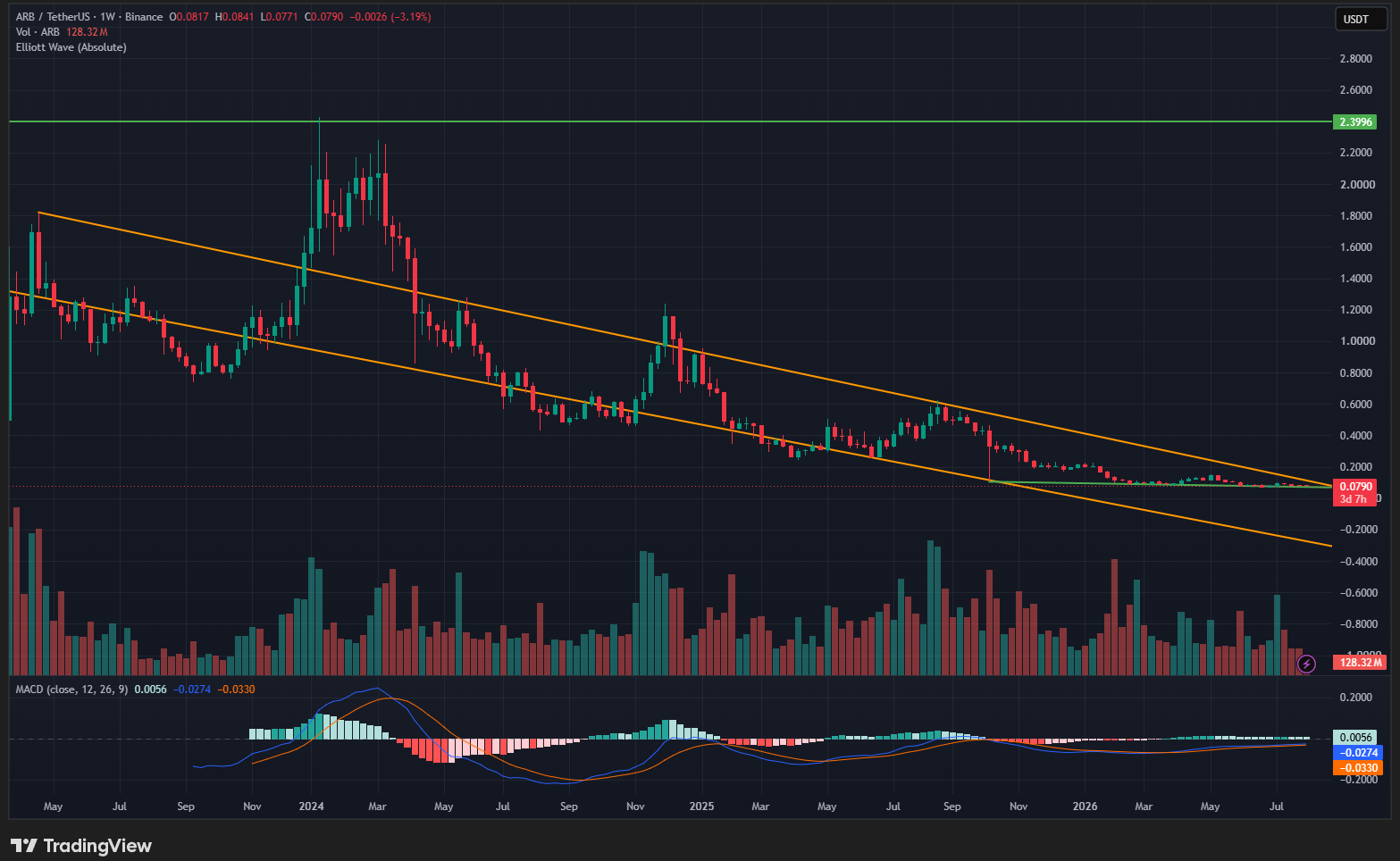
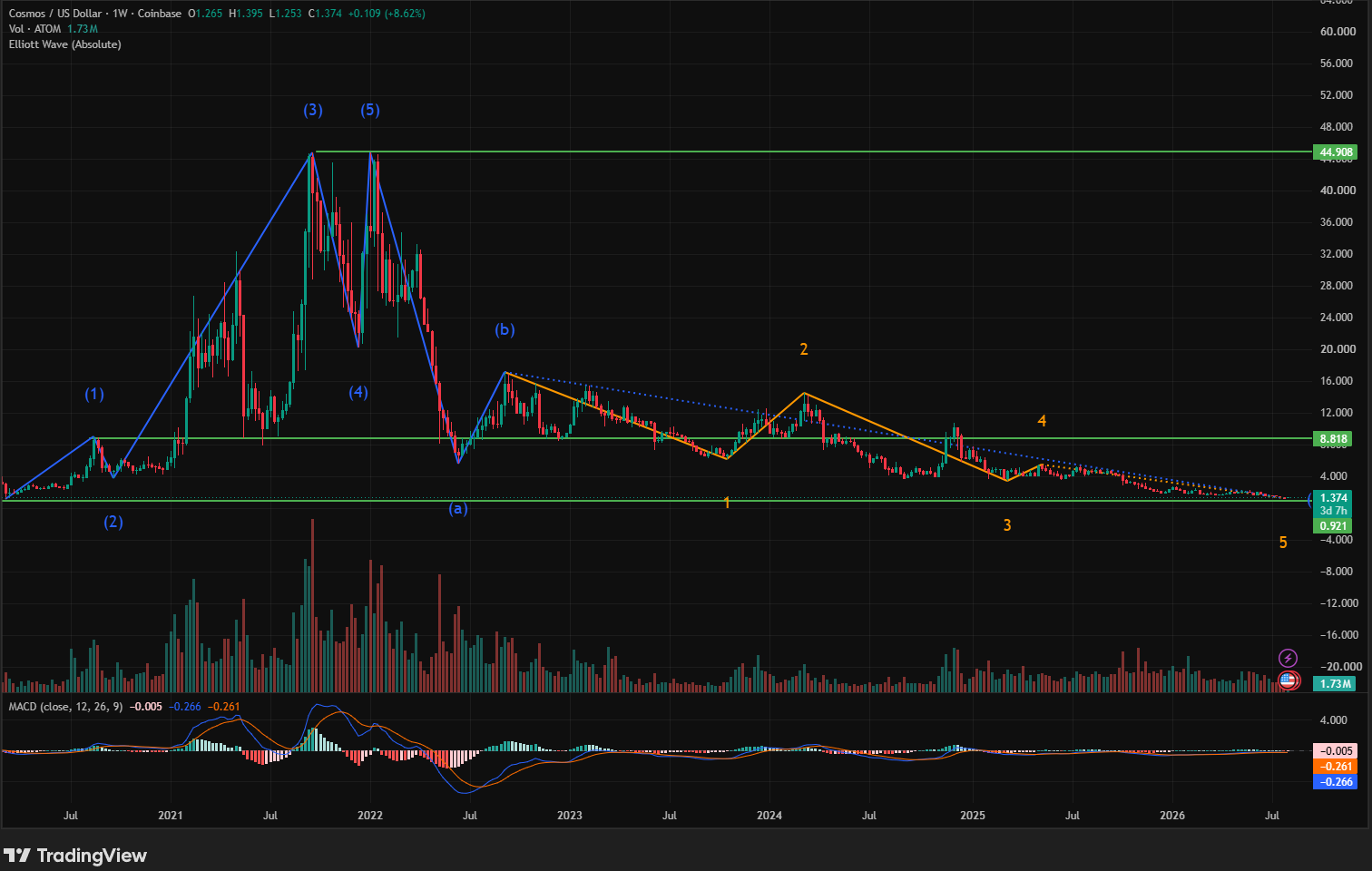
- Both charts show technical setups a trader could act on independently of the fundamental case
Arbitrum: a distinct risk trade off recent lows
ATOM: structure never broke its prior cycle low, sitting near a 0.618 retracement zone
Note: A chart setup is not a substitute for a revenue case: this is a high-risk, trade-only conversation for either asset, not a position thesis
Monitor next:
- Whether Arbitrum's alternative revenue streams (TimeBoost, congestion fees) scale enough to offset DAO token unlocks
- Whether Cosmos's tokenomics reforms actually reduce inflation and stick
- Whether either network's core function gets absorbed by faster-moving competitors first
Crypto Dashboard
The research workspace this kind of review comes out of is built for exactly this problem: too much crypto information, not enough organized context.
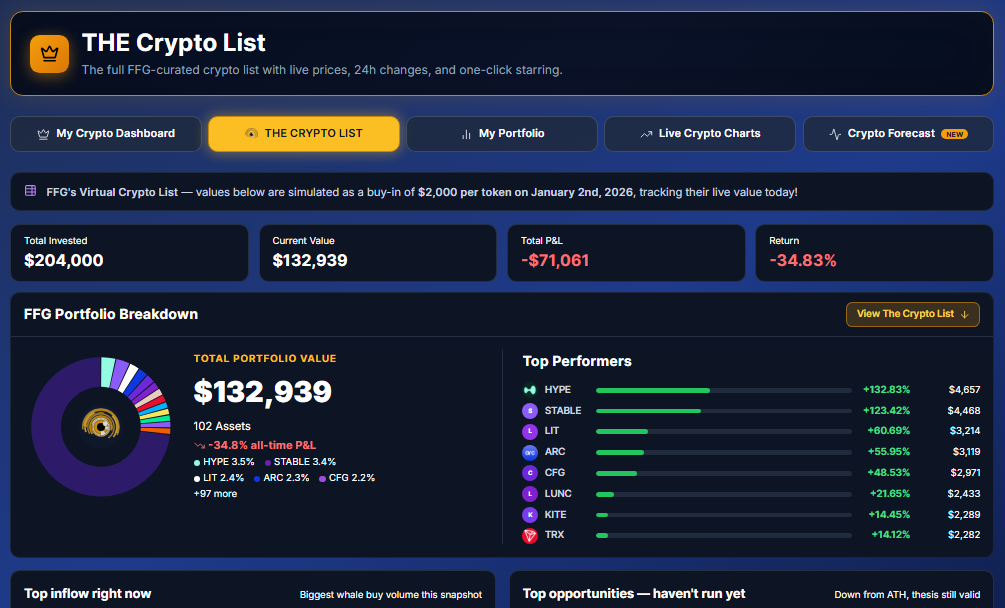
It sits alongside Crypto Masterminds and the rest of the Founder library, giving members a way to move from a discussion like this one straight into the underlying charts and asset data without rebuilding context every week.
During the summer sale, Founder access is available for $100 through August 31, 2026.
Take advantage of the Summer Sale now for 20% off a monthly Founders membership, with the discount locked in through the end of 2026.
Disclaimer: This review reflects FFG's internal research process and current market data as reviewed on the recording date. It is not financial advice, does not guarantee performance, and does not replace independent due diligence. Crypto assets carry substantial risk of loss.



Comments
Sign in or join the 1% who know more than the 99% to read and leave comments.