
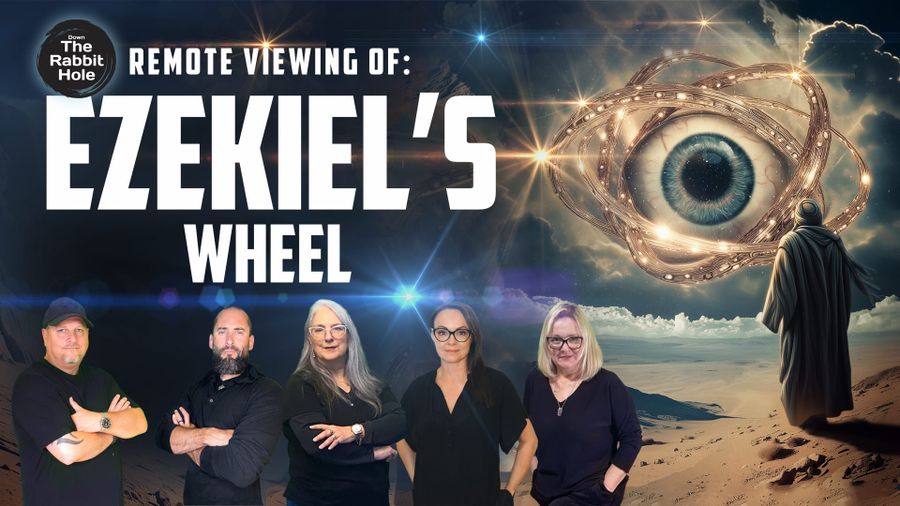
What Down the Rabbit Hole Found Inside One of History's Most Contested Encounters
For nearly 2,600 years, scholars, engineers, and theologians have argued about what Ezekiel actually saw.
A divine throne. A hallucination. A misunderstood aircraft. The debate has attracted everyone from biblical translators to a NASA engineer who spent decades reverse-engineering the biblical account into aerospace blueprints.
What it has not attracted, until now, is a team of trained remote viewers tasked against the event itself — blind, independent, and operating simultaneously across multiple sessions.
The results forced a conversation the team did not expect to have.
Across four independent viewers working without any knowledge of the target, the data did not converge on prophecy. It did not converge on mystical vision. What it did converge on was something more difficult to dismiss — and something that raises a sharper question than the one Ezekiel himself was trying to answer.
The question is not whether the encounter was real. The data suggests it was. The question is what it means about how such encounters get recorded, translated, and handed down to the rest of us.



Comments
Sign in or join the 1% who know more than the 99% to read and leave comments.