
What Is Remote Viewing? History, Methods & FFG
Learn what remote viewing is, how blind protocols work, its SRI and Stargate history, the scientific debate, and how FFG applies remote viewing.
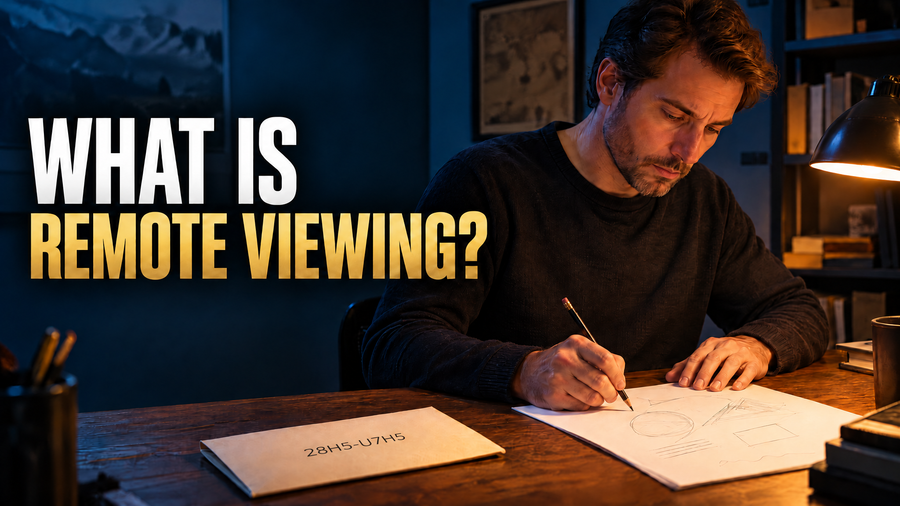
What Is Remote Viewing?
A structured approach to information acquisition under blind conditions
Remote viewing is the practice of attempting to describe a hidden person, place, object, event, or other target without being told what that target is. The viewer typically receives only a neutral reference, records impressions before receiving feedback, and preserves that session record for later examination. Although remote viewing is often associated with extrasensory perception (ESP), clairvoyance, or psychic phenomena, structured remote viewing is distinguished by its process: independent tasking, viewer blinding, contemporaneous documentation, and review against feedback or outcomes when evidence becomes available. Remote viewing remains scientifically controversial. Government-funded research into the subject is well documented, but the existence of that research is not itself proof that remote viewing works. Individual claims still need to be assessed on the quality of their controls, records, and results.
A Simple Example of Remote Viewing
Imagine that someone selects a photograph of a location and assigns it the reference number 7429. The viewer is shown only that number—not the photograph, its title, or its location. The viewer then records whatever impressions arise: shapes, textures, sounds, movement, spatial relationships, sketches, or other observations. Guesses about the target’s identity are labeled as interpretations rather than presented as direct perceptions. Only after the session record is complete does the viewer see the photograph. The original record can then be compared with the target, including observations that appear accurate, inaccurate, ambiguous, or unsupported. Different methodologies conduct this process differently, but the central principle remains the same: record what was perceived before revealing what the target was.
Where Did Remote Viewing Come From?
Modern remote-viewing research emerged in the early 1970s at the Stanford Research Institute, now known as SRI International. Researchers including Harold Puthoff and Russell Targ investigated whether participants could describe distant or concealed targets without ordinary sensory access. Ingo Swann became an important figure in this research and in the development of structured remote-viewing procedures. Other participants associated with the early programs included Pat Price and Joe McMoneagle.
During the Cold War, U.S. government agencies funded research and operational programs exploring possible intelligence applications. These efforts operated under several names over time and are now frequently discussed together under the Stargate name. The programs were declassified and reviewed in the 1990s. Their history is documented, but the interpretation of their results remains disputed.
Remote Viewer 001: McMoneagle's Severodvinsk Session
In 1979, Joseph McMoneagle, Remote Viewer 001 at Fort Meade, was tasked to describe a facility on the other side of the world with no prior information. He produced the Soviet shipyard at Severodvinsk and a submarine larger than anything on record. Satellite imagery confirmed it 114 days later. Nyiam Vendryes breaks down the case that set the standard for remote viewing. #RemoteViewing #ProjectStargate #JosephMcMoneagle #FortMeade #FutureForecasting
 Jordan Finneseth
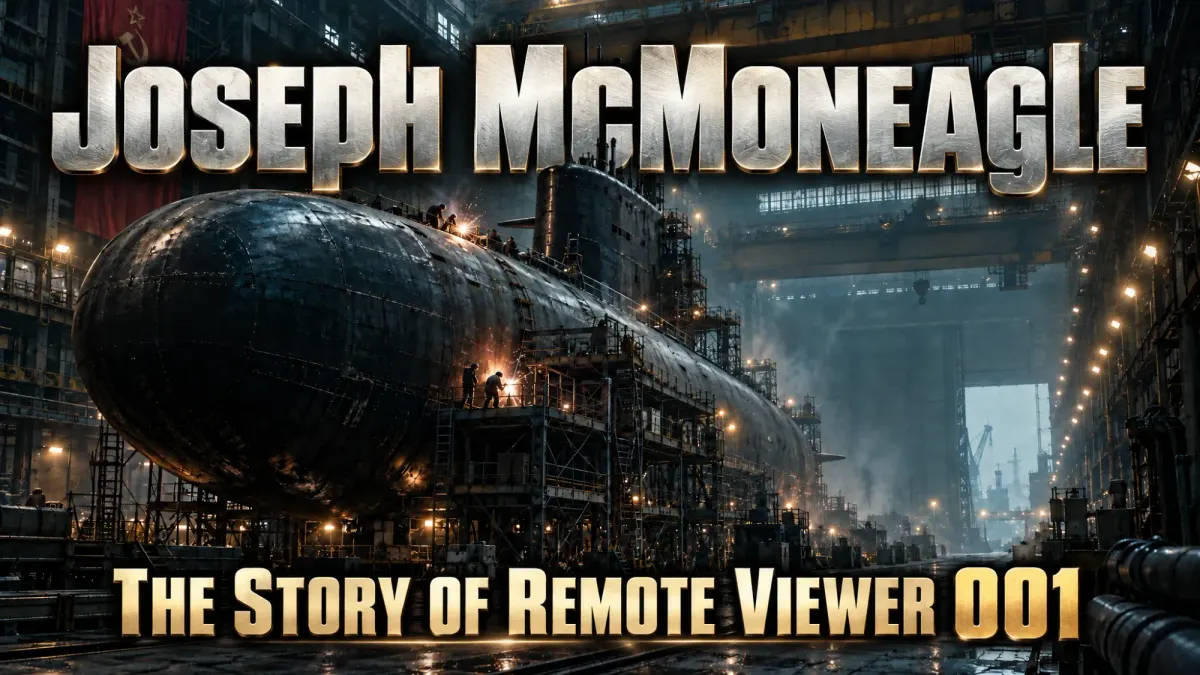
This Future Forecasting Group presentation follows Joe McMoneagle’s work on a Soviet shipyard target during the government remote-viewing program. It examines how viewers were tasked, how their sessions were recorded, and how subsequent information was compared with the original reports. The account provides a detailed look at one of the best-known cases associated with Project Stargate. As with any individual case, it should be considered alongside the original records and the broader debate over the program’s operational reliability.
How Does Remote Viewing Work?
There are two different questions behind “How does remote viewing work?” The first concerns the procedure: how a session is conducted. That can be described through tasking, blinding, documentation, feedback, and analysis. The second concerns the mechanism: how someone could obtain information about a target without ordinary sensory access. There is no broadly accepted scientific explanation for such a mechanism. Theories involving consciousness, nonlocal perception, or other proposed processes remain hypotheses, not established explanations.
It is therefore possible to explain the remote-viewing process without claiming that science has settled how—or whether—the underlying phenomenon operates.
Four Elements of Structured Remote Viewing
Remote-viewing methodologies use different techniques and terminology. Structured practice generally depends on four foundational elements.
1. Independent Tasking
The target is selected or defined independently of the viewer. It may address a research question, an intelligence requirement, or a specific forecasting problem. The viewer’s role is not to choose an appealing subject or decide what the answer should be. Their role is to work the assigned target and report what they perceive.
2. Viewer Blinding
The viewer is not given the target’s identity or unnecessary information that could shape the session. This separation is commonly called being blind to the target. It reduces the opportunity for suggestion, ordinary inference, and contamination from outside information. A double-blind arrangement applies additional separation so that other people interacting with the viewer also do not know the target’s identity. The exact safeguards depend on the project design.
3. Documentation Before Feedback
The viewer creates a contemporaneous record before receiving target feedback. Depending on the methodology, the record may include writing, sketches, sensory impressions, physical descriptions, movement, spatial relationships, and other observations. The original record matters because it preserves what was reported before the answer was known. Later summaries and interpretations should not replace it.
4. Separation of Observation and Interpretation
The mind naturally tries to turn fragmentary impressions into a recognizable story. A viewer who perceives height, metal, and movement, for example, might prematurely conclude “bridge” or “aircraft.” Structured methodologies teach viewers to distinguish the underlying observations from those conclusions. This premature interpretation is commonly called analytical overlay, or AOL. Interpretations can be recorded and examined, but they should not be confused with direct session data.
What Remote Viewing Is Not
Remote viewing is not interchangeable with every intuitive or paranormal practice.
- It is not necessarily visual. Despite the word “viewing,” impressions may involve sounds, textures, movement, spatial relationships, or other sensations rather than clear mental pictures.
- It is not the same as an open-ended psychic reading. A psychic reading, mediumship session, or astrological consultation may use a different format and purpose. Those activities do not automatically constitute a blind remote-viewing session.
- It is not conventional research. Searching online, reviewing satellite imagery, or assembling public records may be valuable investigative work, but it is not blind perceptual data acquisition.
- It is not astral projection. Astral projection generally describes an experienced sense of leaving the body or traveling elsewhere. A remote viewer can remain seated in an ordinary room while recording impressions.
- It is not retrospective storytelling. Explaining an event after it happened is not equivalent to preserving a session record before feedback or outcomes were known.
- It is not guaranteed to be accurate. A session may contain a mixture of specific observations, ambiguity, irrelevant material, and error. Confidence during a session does not establish accuracy.
Remote viewing in this context is also unrelated to remotely viewing a computer screen, security camera, or other digital device.
Remote Viewing vs. Clairvoyance
Clairvoyance is a broad term often used for obtaining information through means other than the physical senses. Remote viewing is more specifically associated with a defined task, controlled access to target information, and a reviewable session process. A spontaneous impression about a distant event might be described as clairvoyance. A session in which a viewer receives a neutral target reference, documents impressions without knowing the target, and later compares the record with feedback follows a more recognizably remote-viewing framework.
The distinction does not settle whether either phenomenon is genuine. It clarifies the method being used and the kind of evidence available for examination.
Controlled Remote Viewing and Other Methodologies
Controlled Remote Viewing
Commonly abbreviated CRV, is a staged methodology associated with Ingo Swann and subsequent government-related research. It uses structured procedures intended to organize session work and manage interpretation.
Other Remote Viewing Approaches
Other approaches include the Hawaii Remote Viewers Guild methodology (HRVG), Extended Remote Viewing (ERV), Flow, and additional schools developed by researchers and practitioners.
Associative Remote Viewing
ARV refers to a tasking approach in which possible outcomes are associated with different targets. It should not be treated as interchangeable with every other remote-viewing method.
These approaches differ in structure and technique. A session should therefore be evaluated according to its stated methodology, actual protocol, and preserved evidence—not merely by the label attached to it.
Is Remote Viewing Scientifically Proven?
Remote viewing has been scientifically investigated, but it is not broadly accepted by mainstream science as a reliably established ability.
The 1995 American Institutes for Research evaluation, prepared during the review of the government program, reported that some laboratory studies produced hits more often than chance. However, the evaluators said it was unclear whether those effects could be attributed unambiguously to paranormal ability rather than characteristics of the judging, targets, or methods.
The same evaluation concluded that the operational program had not produced actionable intelligence and that its reports were often inconsistent, ambiguous, or inaccurate regarding specifics. Researchers and practitioners continue to disagree about experimental controls, replication, judging methods, statistical interpretation, and the significance of individual results. The most accurate summary is therefore neither “remote viewing has never been studied” nor “science has conclusively proven it.”
The research exists; its interpretation and operational reliability remain contested.
For FFG, this uncertainty reinforces the need for documented work rather than reliance on confident claims.
Can Anyone Learn and Develop Remote Viewing?
Structured remote-viewing methods can be taught, but learning a procedure does not guarantee reliable performance. Remote-viewing training generally focuses on methodology, session discipline, documentation, management of interpretation, and review against feedback. Individual results may vary considerably, and completing a course does not establish operational competence.
Development requires consistent practice, careful documentation, honest feedback, and a willingness to examine unsuccessful sessions as well as apparent hits. A large collection of favorable stories is not the same as a well-maintained body of work. The useful question is not simply “How long has someone practiced?” but “What can their preserved sessions and outcomes actually demonstrate?”
What Is Remote Viewing Used For?
Researchers and practitioners have explored remote viewing in relation to concealed locations, historical questions, missing-person inquiries, archaeological targets, future events, and financial or geopolitical forecasting. These are areas of attempted application, not proof that remote viewing is consistently effective in each field. The value of any particular application depends on whether the resulting information can be assessed against evidence. Future-oriented work creates an especially clear evidentiary requirement: the forecast must be documented before the outcome is known. A prediction reconstructed after an event is not equivalent to a preserved forecast made beforehand.
How Future Forecasting Group Uses Remote Viewing
Future Forecasting Group applies remote viewing to research and forecasting projects involving global events, markets, cryptocurrencies, and other complex subjects. Depending on the assignment, multiple viewers may work independently before their findings are compared. This allows analysts to examine recurring observations, meaningful differences, contradictions, and areas of uncertainty rather than relying on one person’s narrative.
FFG’s approach emphasizes:
- Defined tasking and blinding conditions.
- Session records created before feedback.
- Forecast documentation before outcomes are known.
- Independent contributions followed by team review.
- Preservation and publication of work for examination.
This FFG presentation traces remote-viewing market research from early associative remote-viewing experiments to the group’s current work on cryptocurrency and financial subjects. It explains why simply forecasting whether a price will rise or fall provides limited intelligence, and why FFG also examines project leadership, technology, holder sentiment, chart structure, and other describable features. Those details supply material that can be examined alongside the resulting forecasts and market outcomes.
The video describes FFG’s research approach and historical account of its work. It is provided for informational purposes and is not financial advice.
On the inaugural episode of the Aperture Podcast from the International Remote Viewing Association (IRVA), host and Aperture managing editor Ryan Kick described Future Forecasting Group as “the most successful and most published remote viewing company in the world.” That is Aperture’s characterization of FFG, not a self-awarded ranking. For FFG, outside recognition does not replace the underlying obligation: document the work, make the record available for inspection where possible, and allow readers to evaluate the results for themselves.
Frequently Asked Questions
What does remote viewing mean?
Remote viewing means attempting to obtain information about a target that is hidden from the viewer, usually while working from a neutral reference rather than the target’s identity. Structured practice adds controls such as independent tasking, blinding, documentation before feedback, and later review.
Is remote viewing the same as ESP?
Remote viewing is often categorized as a form of ESP or anomalous cognition, but the terms are not identical. ESP is a broad category covering several claimed forms of perception. Remote viewing generally refers to a more defined task-and-session process used to collect and examine target-related impressions.
What is a blind remote-viewing target?
A blind target is one whose identity is withheld from the viewer during the session. The viewer may receive a neutral reference or coordinate but is not given the target’s name, photograph, or other identifying information.
What is analytical overlay?
Analytical overlay, or AOL, occurs when the mind interprets fragmentary impressions and turns them into a conclusion or story. Structured methodologies encourage viewers to identify and separate those interpretations from their underlying observations.
What is Controlled Remote Viewing?
Controlled Remote Viewing, or CRV, is a structured remote-viewing methodology associated with Ingo Swann and government-related research. It uses staged procedures to organize the collection of session data and manage analytical interpretation.
Can remote viewing predict the future?
Sessions intended to describe future outcomes are commonly called precognitive remote viewing. Such forecasts should be evaluated using records preserved before the outcome occurred. A forecast’s existence can be documented without assuming that every future-oriented session will be accurate.
How long does it take to learn remote viewing?
A person can learn the basic structure of a methodology relatively quickly, but developing dependable session discipline takes sustained practice. There is no universal timeline or guarantee of proficiency. Training history should be distinguished from demonstrated performance.
Is one impressive session enough to prove remote-viewing ability?
No. A single session may be interesting, but it cannot establish consistency by itself. Evaluation should consider the blinding conditions, original record, possibility of outside information, judging method, and broader pattern of accurate and inaccurate work.
Examine the Standard Behind the Work
Understanding remote viewing begins with understanding the difference between an impression and a documented session. FFG’s own standard explains the controls, records, review process, and evidentiary expectations applied to work conducted or published under the Future Forecasting Group name.
Don't Miss What's Coming Next
Join 2,700+ forward-thinkers getting our weekly intelligence brief